
Fall Seminar 2025: gardening with natives for birds, bees, and butterflies
After a 7 year hiatus, the Master Gardeners of Door County presented a fall seminar on October 25, 2025, titled “Gardening with Natives for Birds, Bees, and Butterflies.” Two presentations by Midwest horticultural experts focused on the interrelated life cycles of plants and pollinators.

David Garison Stevens, Ed Hasselkus Curator of Longenecker Horticultural Gardens at the University of Wisconsin-Madison Arboretum, gave a skillful presentation detailing native shrubs and trees which will add beauty to our home landscape while attracting and sustaining a wide variety of bird and pollinator species. Stevens explained how a natural landscaped yard can mimic the natural forest structure by choosing diverse native species of trees and shrubs.
Since healthy bird populations are inextricably linked to healthy insect populations, it was fascinating to learn what pollinators require for nesting and feeding. Since caterpillars are rich in protein and fat, they are an important food source inviting birds to our yards. If you look at his handout detailing an in-depth assortment of lovely plants which sustain caterpillars, you will see how to thoughtfully create a diverse, personal landscape. His information on native plants shows great knowledge and depth, allowing us to select a plant based on size, season of usefulness, site requirement, and the pollinator or bird we wish to attract.
Emily Stone, Naturalist and Education Director at the Cable Natural History Museum, shared her trip to the Mexican winter site at the end of the annual Monarch butterfly migration. Detailing the life cycle of the Monarch butterfly and the dependence on milkweed plants highlights how vital our yards are to sustaining their continued survival. This underscores the need for including Door County native keystone plants in the landscape.
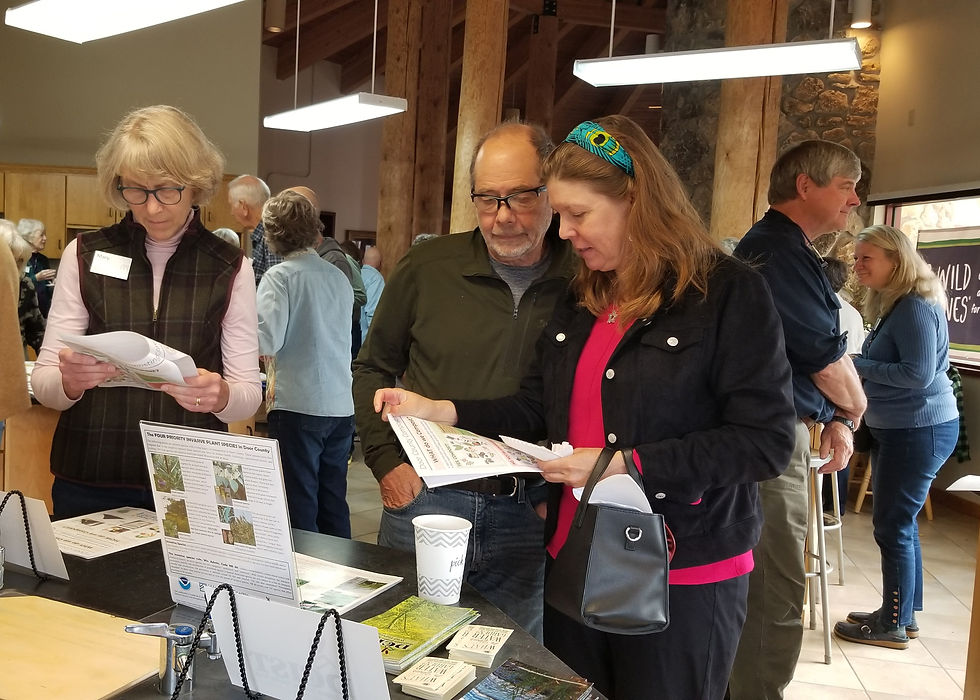
Understanding the importance of a sustainable ecosystem, a coalition of Door County horticultural, ecological, and environmental groups came together to support the fall seminar. The Door County Master Gardeners, Crossroads at Big Creek, and the Wild Ones Door Peninsula Chapter co-sponsored the event. Conservation Partners included the Climate Change Coalition of Door County, Door County Invasive Species Team, Door County Land Trust, Door County Seed Library, The Clearing, The Ridges, and Wisconsin Master Naturalists. We thank Badger Talks from the University of Wisconsin-Madison for their support of the event.


